The Problem with Mormon Testimony as a Determiner of Truth
Won't God tell me if the Book of Mormon is true? How else would I determine which faith is true?

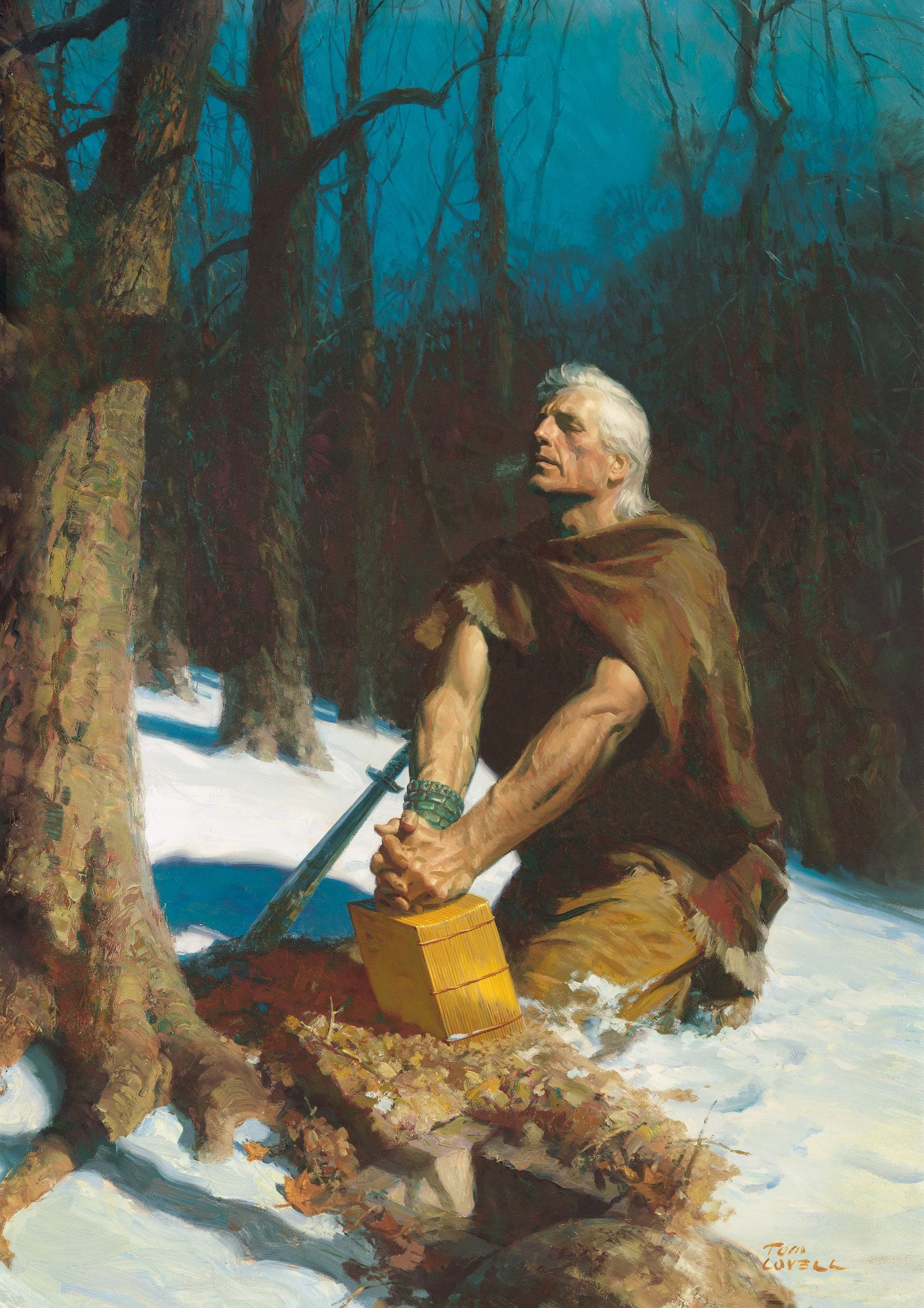
Behold, I would exhort you that when ye shall read these things, if it be wisdom in God that ye should read them, that ye would remember how merciful the Lord hath been unto the children of men, from the creation of Adam even down until the time that ye shall receive these things, and ponder it in your hearts. And when ye shall receive these things, I would exhort you that ye would ask God, the Eternal Father, in the name of Christ, if these things are not true; and if ye shall ask with a sincere heart, with real intent, having faith in Christ, he will manifest the truth of it unto you, by the power of the Holy Ghost.1
These are the concluding words of the Mormon prophet Moroni, who would later go on to reveal to Joseph Smith the location of the golden plates, in the final chapter of the Book of Mormon, allegedly. This chapter forms of a fundamental foundation to how Latter-day Saints justify their belief. The most confident assurance Mormons have that their faith is true is their belief that the Holy Ghost testifies to an honest inquirer that the Book of Mormon is truly from God. Once the inquirer believes that the Book of Mormon is from God, they naturally conclude that Joseph Smith is a prophet of God, and then conclude that the Church of Jesus Christ of Latter-day Saints in the correct religion.
The testimony2 of the Latter-day Saint is their most precious possession, to the point that this confirmation of truth from the Holy Ghost is required in order to be baptized3 and be admitted to the rituals of the Latter-day Saint temples.4 The Latter-day Saint’s testimony, it would seem, is the first requirement of reaching to God in this life, and without it one cannot begin on the path of holiness.
When one talks to Mormon missionaries, and I say this from experience and through Latter-day Saint publications like Preach My Gospel, the main evangelization tactic they use is trying to get the inquirer to read the Book of Mormon and pray about it, asking God if it’s truly from Him (Note: Asking if the Book of Mormon is true is different from asking if it’s “not true”, as Moroni exhorts, but I digress).
But is this how Christians should go about inquiring into truth? Is this what Christ recommends? We will analyze the Mormon justifications for seeking testimony from the Spirit and see that it doesn’t stand up to scrutiny.
1. Asking for Wisdom
A popular proof used by Mormons for seeking this sort of testimony is from St. James the Apostle, who says, “But if any of you want wisdom, let him ask of God, who giveth to all men abundantly, and upbraideth not; and it shall be given him.”5 This verse is so essential to Latter-day Saint spirituality that it gives context to the first vision of Joseph Smith, who claimed God appeared to him after he prayed for enlightenment on the correct religion to join after reading James 1:5.6 But this verse doesn’t demonstrate the Mormon claim for two reasons:
a. St. James is addressing his epistle to his “brethren”7 who already have faith in Jesus Christ.8 That is to say: those who are already in the Church. This epistle is not addressed to those who live outside the Church, and this is more evident when James exhorts his brethren to seek “priests of the Church”9 for anointing the sick and when he exhorts his audience to convert those who have fallen away back to the truth, which St. James’ brethren would possess.10 The non-Mormon inquirer cannot, logically, be the intended audience of St. James in the Mormon mind, for inquirer would not be St. James’ brother; The inquirer is not a member of the Church of Jesus Christ of Latter-day Saints, he would not have faith in his conception of Jesus Christ, and he would, most likely, not seek Mormon priest if a friend of his was in need of assistance when sick.
b. St. James tells his brethren to ask God for wisdom, and it will be given to them, but observe how the verse has a specific object for asking: God. Now, Mormons and Catholics have different conceptions of God, so much so that I contend that we worship different beings altogether,11 and this is a view shared by LDS apologist Jacob Hansen.12 How, then, can I pray to the Mormon god, the god whom Latter-day Saints say St. James is referring to, for wisdom when I do not believe that he exists? The only way I could pray to this god is by presupposing his existence and the non-existence of my God, but that doesn’t seem like a thing an honest seeker would do, for it would make the Latter-day Saint argument circular, and it’s contrary to what the Church of Jesus Christ of Latter-day Saints encourages when it says, “hold fast to what you know.”13 And the existence of the God of Classical Theism is not a part of faith, but a conclusion reached after the observance of the processes of the world and philosophical inquiry.14 To presume the non-existence of the God of Classical Theism would contradict what the Catholic inquirer knows by use of reason and observation.
2. Good Fruits
Facing this, the next place for Mormon apologist and missionaries will tell you to observe the good fruits of the Book of Mormon in both your lives and the lives of others.15 When it comes to analyzing the fruits of Mormons in general, this opens them up to criticism regarding what is considered virtuous in Mormonism, and that will be the next of the topics I will discuss concerning Mormonism. But, the claim that the Book of Mormon produces good fruits is very open to criticism, and I think that Latter-day Saints can admit that an honest disagreement and discussion can take place over that claim.
In any regard, Mormons will claim that the interior peace and calm one might feel while reading the Book of Mormon is proof of its Divine origin. But, that being unique to the Book of Mormon isn’t a strong argument, for the Book borrows greatly from the Bible.16 How, then, can the inquirer rule out that the feeling of peace he feels when he reads Christ’s words in the Book of Mormon aren’t stemming from the fact that they are borrowed - or, more cynically, stolen - from the Bible?
3. The Example in Scripture
If we ought not to rely on an interior testimony to tell us to enter into a new religion, what are we to do? Scripture provides us two things, at the very least, that will help us to come to the truth.
a. In Acts 17, mention is made of the Berean Jews, who, when the Sts. Paul and Silas had arrived to their city, searched the scriptures of the Old Testament to see if the teachings of the Apostles were true.17 Now, they are called “more noble” than the Jews of Thessalonica, who did not search their scriptures to verify the claims of the Apostles. The lesson here is that an intellectual analysis of the claims of one who claims to be from God is required. Now, the Catholics and the Jews have the Old Testament in common, and it can be used as common ground to discuss each other’s differences. The Catholics have no scripture in common with Muslims, though, so discussions between the two should use philosophy and empirical sciences as common ground. Since, however, Catholics and Latter-day Saints have both the Old and New Testaments in common (save the deuterocanon), these should be the common ground from which conversation takes place. That is to say: The Mormon should be able to justify their claims to the Catholic through use of scripture, philosophy, and the sciences, and so too should the Catholic be able to argue to the Mormon from the same. To use the Book of Mormon to tell a Catholic why he should accept it is, therefore, circular, or, at least, not productive.
b. Our Lord provides simple proofs for His messengers: The performance of miracles.18 The performance of miracles was fundamental to the ministry of the Apostles,19 the performance of supernatural acts was an invaluable tool for them, and showed to the world the Divine seal of approval. And we believe that these things continue to the present day as evidence of Divine approval of the Catholic Faith: Eucharistic miracles, the Miracle of the Sun of Our Lady of Fatima, the Tilma of Our Lady of Guadalupe, the lives of the saints - and I can particularly recommend the lives of the saints written by St. Gregory the Great in The Dialogues. I encourage the inquirer to look into these great Divine miracles.
These two reasons are why I’m Catholic: Because God is reasonably discovered, and then He reveals more about Himself through the Catholic Church, and He confirms the truthfulness of her teachings through the miracles He works even to the present day. I cannot find similar miracle claims, or even a few miracles that are as great as Catholic miracles, within the Latter-day Saint movement. Relying on one’s own self, their own subjective feelings, or even what one thinks they feel, ought not be said to be the standard test Our Lord uses to lead us to Himself.
Published Sunday, January 4th, 2026, the 15th day of the Moon, the Octave Day of the Holy Innocents, Feast of the Most Holy Name of Jesus.
Moroni 10:3-4.
CJCLDS, Topics and Questions, “Testimony”, https://www.churchofjesuschrist.org/study/manual/gospel-topics/testimony?lang=eng.
CJCLDS, Preach My Gospel: A Guide to Sharing the Gospel of Jesus Christ, “Chapter 12: Help People Prepare for Baptism and Confirmation”, https://www.churchofjesuschrist.org/study/manual/preach-my-gospel-2023/20-chapter-12?lang=eng.
CJCLDS Newsroom, “Church Updates Temple Recommend Interview Questions”, https://newsroom.churchofjesuschrist.org/article/october-2019-general-conference-temple-recommend.
James 1:5.
Pearl of Great Price, Joseph Smith - History 1:12-17.
James 1:2.
James 2:1.
James 5:14
James 5:20
cf. My previous article: “The Catholic Concern of Mormonism”.
Thoughtful Faith on Twitter, December 17th 2025, “You know what is spaceless, timeless immaterial, maximally powerful and transcendent. Eternal law. Creedists don’t worship the father. They worship eternal law and call it God.”.
CJCLDS, Topics and Questions, “Seeking Answers to Questions”, “Center Your Life on Jesus Christ”, https://www.churchofjesuschrist.org/study/manual/gospel-topics/seeking-answers/02-center-your-life-on-jesus-christ?lang=eng.
St. Thomas Aquinas, Summa Theologiae, I., Q. 2.
Richard G. Hinckley, Liahona, June 2008, “Fruits of the Book of Mormon”. https://www.churchofjesuschrist.org/study/liahona/2008/06/fruits-of-the-book-of-mormon?lang=eng.
Compare 3 Nephi 12 with Matthew 5.
Acts 17:10-12.
Mark 16:17-18.
cf. Acts 2, Acts 20:7-12, The Acts of Peter and Paul